About
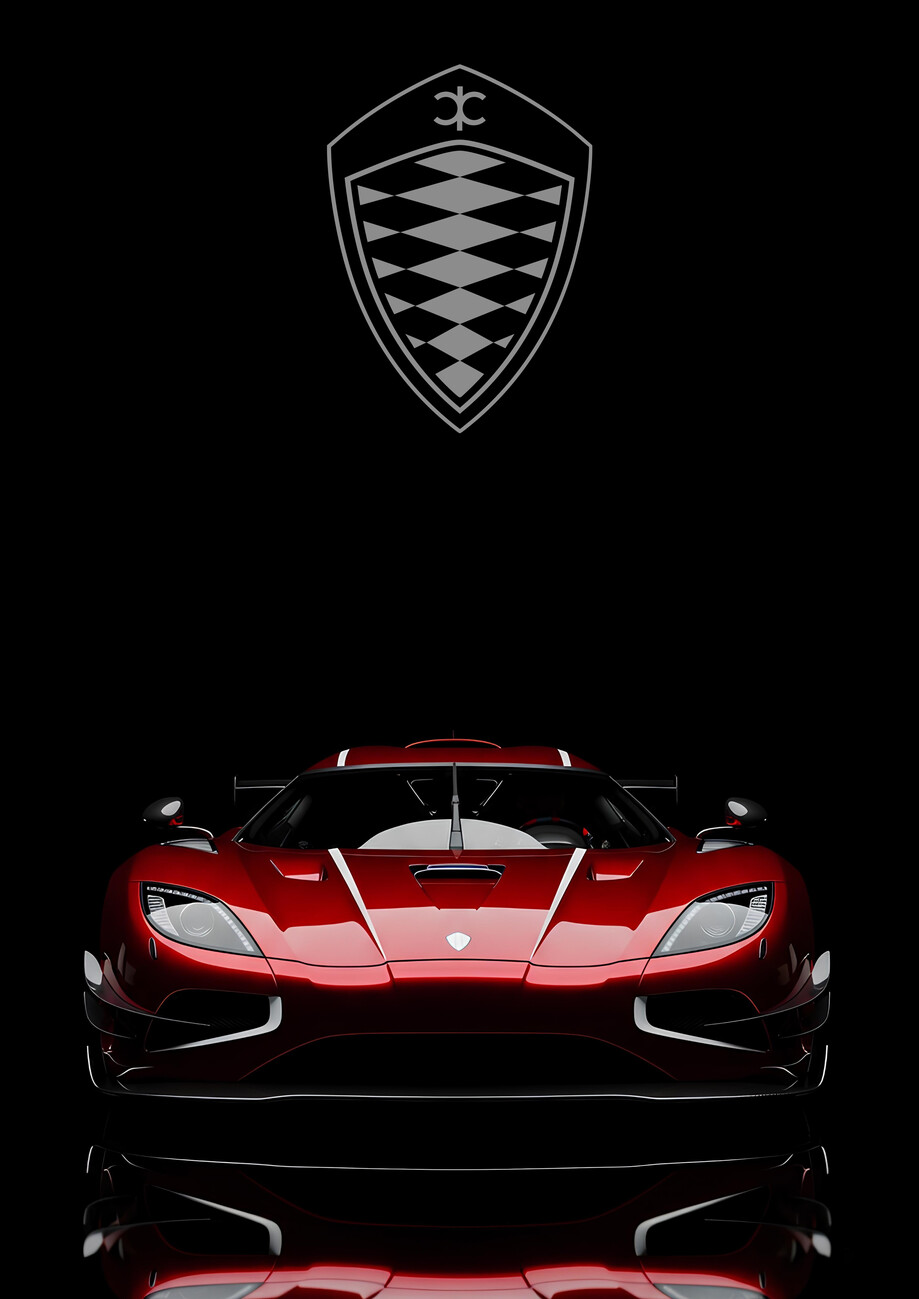
Koenigsegg is a Swedish hypercar manufacturer founded in 1994, renowned for groundbreaking engineering, exceptional performance, innovative technology, and distinctive Scandinavian design.
Koenigsegg History
Koenigsegg Automotive AB began on August 12, 1994, when 22-year-old Christian von Koenigsegg founded a company dedicated to building an uncompromising sports car. Sweden had a respected automotive industry, but it was better known for safety, durability, and practical engineering than exotic performance. Christian entered the field without a manufacturing background, major funding, or an established market. What he possessed was an interest in machinery, invention, and speed. Inspired by the idea of creating a perfect racing machine, he gathered a small team and began turning sketches, experiments, and ambitious engineering concepts into a functioning vehicle.
The first important result was the Koenigsegg CC prototype. After nearly two years of development, it was driven publicly at Sweden’s Anderstorp race circuit in 1996. Professional drivers tested the car, helping demonstrate that the company’s concept could work beyond drawings and models. In 1997, the prototype appeared at the Cannes Film Festival, where it attracted attention from the media and prospective customers. Koenigsegg moved from Olofström to a workshop in Margretetorp in 1999. The following year, a production prototype of the CC8S debuted at the Paris Motor Show, bringing the company closer to homologation and commercial production.
The first customer-focused CC8S was built in 2002 and presented at the Geneva Motor Show in 2003. Its carbon construction, removable roof, clean shape, and distinctive dihedral doors established design principles that remain recognizable across later Koenigsegg models. Only six examples were produced, but the CC8S proved that an independent Swedish company could build a production supercar. It also earned recognition for engine power and design. Shortly before its Geneva appearance, disaster struck when the Margretetorp factory caught fire. Staff saved vehicles and essential tooling, although many early records were destroyed. Koenigsegg recovered and relocated to former Swedish Air Force facilities in Ängelholm.
The Ängelholm site provided workshops, a runway, and space for research, assembly, engine development, composites, and testing. It had once housed the Swedish Air Force’s Ghost Squadron, whose emblem later became part of Koenigsegg’s identity. From this base, the company introduced the CCR in 2004. With 806 horsepower and major chassis and aerodynamic improvements, the CCR expanded the CC8S formula. In February 2005, it reached 387.86 km/h at Nardò, briefly becoming the world’s fastest production car. The CCX followed as an internationally homologated model, while the 2007 CCXR used E85 capability to produce 1,018 horsepower and demonstrated Koenigsegg’s interest in alternative fuels.
Koenigsegg entered a new phase with the Agera in 2010. Its twin-turbo V8, redesigned exhaust system, advanced transmission, and refined aerodynamics delivered exceptional performance while preserving the company’s lightweight philosophy. The Agera R arrived in 2011 with flex-fuel capability and up to 1,140 horsepower, then set a remarkable 0–300–0 km/h time. The Agera S was developed for markets where E85 was unavailable and produced more than 1,000 horsepower on conventional gasoline. It also introduced AirCore hollow carbon-fiber wheels, reducing unsprung mass. These cars showed how Koenigsegg increasingly developed engines, electronics, transmissions, composites, suspension systems, and software through deep in-house engineering.
In 2014, the One:1 pushed the Agera platform into new territory. Its name referred to a one-to-one metric horsepower-to-kilogram ratio: 1,360 horsepower and a 1,360-kilogram curb weight. Extensive aerodynamic work and weight reduction made it a landmark track-focused megacar. Only six customer cars and one development vehicle were built. The Regera, unveiled in 2015, approached performance differently. It combined a twin-turbo V8, three electric motors, and an 800-volt battery with Koenigsegg Direct Drive, eliminating a conventional multi-gear transmission. Limited to 80 examples, the Regera blended extreme acceleration with luxury, comfort, automated body closures, and a remarkably smooth driving character.
Also introduced in 2015, the Agera RS translated lessons from the One:1 into a road-focused package homologated for international markets. Twenty-five were produced. In November 2017, an Agera RS driven by Niklas Lilja achieved a two-way average top speed of 447.19 km/h on a Nevada road, setting a production-car benchmark and several related records. Koenigsegg continued improving acceleration and braking performance through repeated 0–400–0 km/h attempts. The Regera completed that challenge in 31.49 seconds in 2019 and later reduced the time to 28.81 seconds in 2023. Such results reinforced the company’s reputation for measurable engineering achievement rather than untested performance claims.
The Jesko debuted in 2019 as the successor to the Agera RS. Named after Christian’s father, it paired a heavily revised twin-turbo V8 with the nine-speed Light Speed Transmission, designed for exceptionally rapid gear changes. The high-downforce Jesko Attack emphasized circuit performance, while the low-drag Jesko Absolut targeted maximum speed and high-speed stability. In 2020, Koenigsegg also revealed the Gemera, its first four-seat model and the beginning of a category it called the Mega-GT. Production specifications later introduced the Dark Matter electric motor, Light Speed Tourbillon Transmission, four-wheel drive, torque vectoring, and an available Hot-Vee V8 hybrid system producing enormous combined output.
The CC850 arrived in 2022 as a modern celebration of the CC8S and Christian von Koenigsegg’s fiftieth birthday. Its Engage Shift System offered both a gated six-speed manual experience with a clutch pedal and fully automatic operation, demonstrating the company’s talent for combining emotion with complex engineering. In 2023, Koenigsegg opened the Gripen Atelier, adding 10,000 square meters for design, development, production, offices, and showroom space. The expansion brought the company’s Ängelholm footprint to roughly 30,000 square meters. By its thirtieth anniversary in 2024, Koenigsegg had grown from a fragile startup into an organization employing more than 700 people.
Record setting remained central to the company’s modern story. In June 2024, the Jesko Absolut completed 0–400–0 km/h in 27.83 seconds, while the Jesko Attack established a production-car lap benchmark at Laguna Seca. The Absolut improved its acceleration-and-braking record again in August 2025 with a 25.21-second run. That year Koenigsegg also introduced Sadair’s Spear, a 30-car, track-focused evolution engineered for increased power, reduced weight, and greater downforce. Across three decades, Koenigsegg has remained unusually vertically integrated, developing core technologies internally. Its history shows how persistence, craftsmanship, experimentation, and fearless engineering transformed an improbable Swedish dream into a recognized hypercar manufacturer.